
Stories of Ganesh
What Are the Ashtavinayak Temples? The Legend of Each Ganpati
By the Dharmasthan team · Updated · 5 sources cited
The Ashtavinayak are eight temples of Ganesha in Maharashtra, visited in a fixed order from Morgaon to Ranjangaon and back to Morgaon. Each has its own legend, most told in the Ganesha Purana and two in the Mudgala Purana; that each happened at its village is the temple’s own tradition.
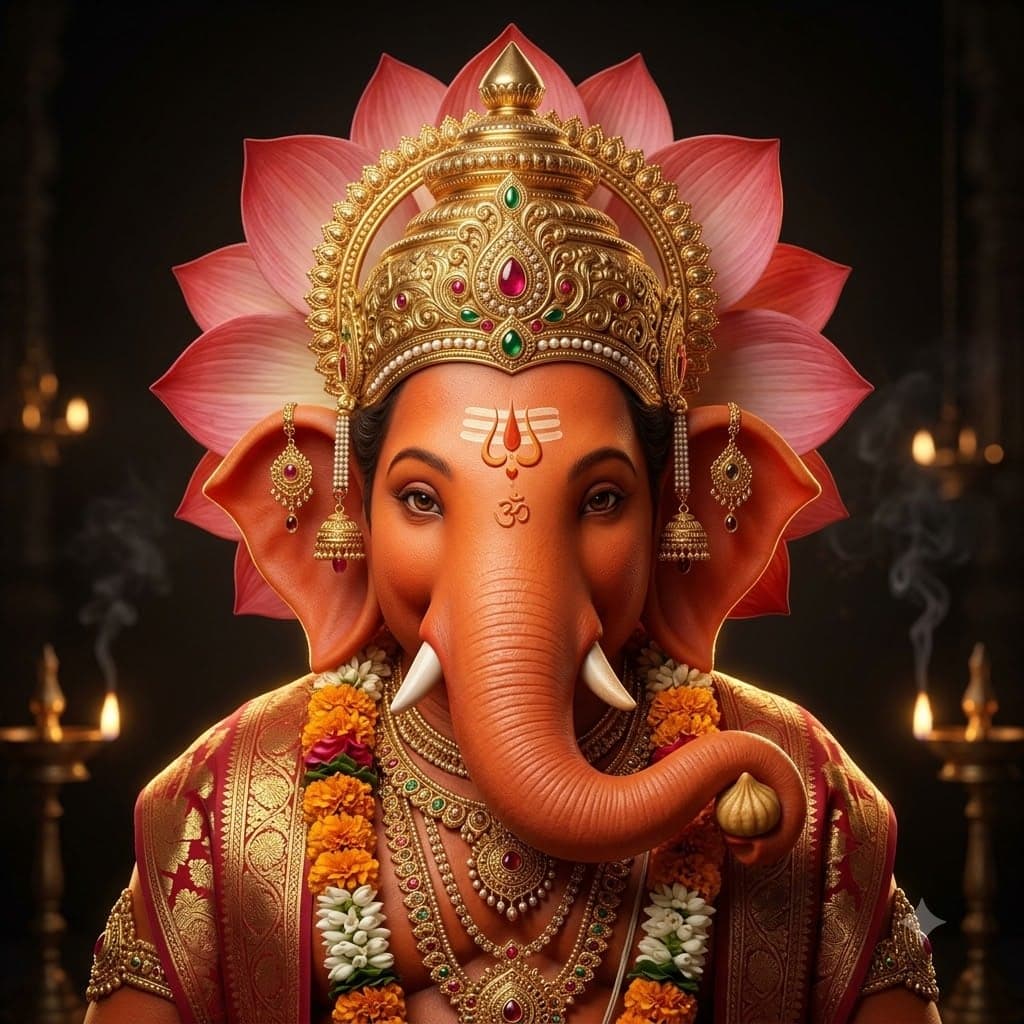
At a glance: Ganesh
- Also known as
- Ganesha, Ganapati, Vinayaka, Vighnaharta, Ekadanta, Gajanana, Lambodara, Vakratunda, Ganpati Bappa, Pillaiyar (Tamil Nadu)
- Family
- Son of Shiva and Parvati, brother of Kartikeya. Wives Siddhi and Buddhi (Shiva Purana), or Riddhi and Siddhi; sons Kshema (Shubh) and Labh. Many in South India hold him unmarried
- Shown with
- Elephant head with one tusk and a large belly; usually four arms holding a goad, a noose, a modak and his broken tusk or a lotus; red in colour; rides a mouse (mushak)
- Worshipped on
- Ganesh Chaturthi and Ganeshotsav, Ganesh Jayanti, monthly Sankashti and Vinayaki Chaturthi; Tuesday in Maharashtra, Wednesday in North India; worshipped first in every puja
- Holy places
- The Ashtavinayak: Morgaon, Siddhatek, Pali, Mahad, Theur, Lenyadri, Ozar, Ranjangaon; Siddhivinayak, Mumbai; Dagdusheth Halwai, Pune; Ganpatipule; Kanipakam
What Ashtavinayak means and the order of the yatra
Ashtavinayak means “the eight Vinayakas”: eight temples of Ganesha in the Pune, Ahilyanagar and Raigad districts of Maharashtra. Pilgrims visit them in a fixed order, Morgaon, Siddhatek, Pali, Mahad, Theur, Lenyadri, Ozar and Ranjangaon, and then return to Morgaon. The Sanskrit verse they recite, beginning “स्वस्ति श्रीगणनायकं गजमुखं मोरेश्वरं सिद्धिदम्”, names the eight in this order. Devotees hold every murti to be svayambhu, self-manifested, and all eight draw large crowds on Ganesh Jayanti.
Each Ashtavinayak temple has its own legend. Six are told in the Ganesha Purana, which its translator Greg Bailey dates to roughly the fourteenth to sixteenth century and believes was composed in Maharashtra, perhaps near these very shrines; the legends of Theur and Ozar are in the Mudgala Purana. The Puranas seldom name the modern villages, so that each legend happened at its temple is the temple’s own tradition.
Morgaon, Siddhatek, Pali and Mahad
Morgaon’s Mayureshwar, on the Karha river in Pune district, is Ganesha as lord of the peacock. In the Ganesha Purana, Ganesha is born in the Treta age as Parvati’s son and takes a peacock as his mount, becoming Mayureshvara (Krida Khanda 98). He kills the demon Sindhu with an axe hurled at his navel, where the nectar that kept him alive was held (123.28–32). Brahma then builds a temple for an image of Gajanana, and the sages give it four doors (126.57–60).
Siddhatek’s Siddhivinayak, on the Bhima in Ahilyanagar district, marks Vishnu’s success. In the Ganesha Purana, Vishnu cannot overcome the demons Madhu and Kaitabha because he went to battle without worshipping Vinayaka (Upasana Khanda 17.37–39). He repeats Ganesha’s six-syllable mantra at Siddhakshetra, “the field of success”, until Ganesha appears, builds a temple whose image the gods call Siddhivinayaka, and only then kills the two demons (18.2–39).
Pali’s Ballaleshwar, in Raigad district, is the only Ashtavinayak named after a devotee. In the Ganesha Purana, Ballala, a merchant’s son in the town of Palli, leads the village boys to worship a stone as Ganesha. His furious father Kalyana smashes the shrine, throws the image away, beats the boy and ties him to a tree. Ganesha comes as a brahmin, frees him and agrees to stay there with Ballala’s name before his own, as Ballala-Vinayaka (Upasana Khanda 22.8–54). Bailey takes Palli to be almost certainly Pali.
Mahad’s Varadvinayak, also in Raigad, is the boon-giver of the sage Gritsamada. In the Ganesha Purana, Gritsamada is born to Mukunda, a sage’s wife, after Indra comes to her in the form of King Rukmangada (Upasana Khanda 36.3–13). Taunted by the sage Atri about his birth, he does penance in the Pushpaka forest until Ganesha makes him the seer of the Rigvedic mantra “गणानां त्वा गणपतिं हवामहे” (Rigveda 2.23.1). Gritsamada installs the image there and names it Varada, “the boon-giver” (37.35–47).
Theur, Lenyadri, Ozar and Ranjangaon
Theur’s Chintamani, near Pune, is Ganesha with the wish-granting jewel. The Mudgala Purana tells the legend: the sage Kapila feeds a demon king named Gana and his whole army by the power of his chintamani jewel; Gana later seizes it, and Ganesha as Ekadanta, riding a lion, cuts off his head. Kapila places the jewel around Ganesha’s neck, saying he will be called Chintamani (Mudgala Purana 2.70–72). The Ganesha Purana’s own Chintamani chapter is a different story, of Indra’s penance at Kadamba city in Vidarbha (Upasana Khanda 34).
Lenyadri’s Girijatmaj, “the son of Girija”, sits in a cave above Junnar. In the Ganesha Purana, Parvati goes to the Lekhanadri mountain, north of Jirnapura, and repeats Ganesha’s one-syllable mantra for twelve years (Krida Khanda 79.39–41). Ganesha appears to her with ten arms and agrees to be born as her son, and she installs an image she names Girijanandana, “Girija’s son” (80.4–22). Devotees identify Lekhanadri with Lenyadri.
Ozar’s Vighneshwar, on the Kukdi river near Junnar, is the lord of obstacles. In the Mudgala Purana, King Abhinandana holds a sacrifice with no share for Indra, and Indra sends Kala, Time itself, who becomes the demon Vighna and disrupts rites everywhere (Mudgala Purana 4.50). Ganesha, born as Gajanana to the sage Parshva, subdues him. Like Ballala, Vighna asks that his name come before Ganesha’s, so Ganesha becomes Vighnaraja and leaves Vighna to obstruct only rites in which Ganesha is not remembered first (4.51.13–37).
Ranjangaon’s Mahaganapati, in Shirur taluka of Pune district, is the Ganesha whom Shiva worshipped. In the Ganesha Purana, Shiva is defeated by the demon Tripura and learns from Narada that he went to battle without worshipping Ganesha (Upasana Khanda 44.14–16). After his penance, Ganesha teaches him his thousand names, and Shiva installs a great image of Ganesha at a place he names Manipur (45.16–20), which Ranjangaon takes as its old name. Only then does Shiva burn Tripura with a single arrow (47.40–46).
What historians add
The eight were a recognised set by the nineteenth century. The Bombay Presidency gazetteer for Poona (1885) calls Ozar and Ranjangaon each the scene of “one of the eight incarnations of Ganpati”, and the Lenyadri image one of his “eight chief forms or ashtavinayakas”. The gazetteer also ties the temples to the family of Morya Gosavi, the Ganapatya saint of Morgaon and Chinchwad, whose dates are disputed: Theur’s main temple was built by Chintaman, the second Dev of Chinchwad, whose family still managed it in 1885, and Ranjangaon’s shrine is said to be his work too.
Lenyadri is the only Ashtavinayak in a cave. Its shrine is Cave VII, the largest of the Buddhist caves around Junnar, a monks’ hall with twenty cells, two of which were opened into one to hold Ganesha; the gazetteer dates the Junnar caves to about the first to fourth century CE. Peshwa Madhavrao I added galleries to the Theur temple and died at Theur on 18 November 1772, in his twenty-eighth year, and his widow Ramabai became sati on his pyre.
Festivals of this story
Aartis and bhajans of Ganesh
- Aala Majha Mumbaicha Raja
- Jhale Bhajan (Nirop Aarti) - Aamhi Namito Tav Charan
- Sukhkarta Dukhharta
- Lalbaugcha Raja (Song)
- Gajanana Ba Dayasagara
- Ghalin Lotangan Vandin Charan
- Jai Ganesh Jai Ganesh Deva
- Parvatichya Bala (Aala Re Aala Ganpati Aala)
Frequently asked questions
What Are the Ashtavinayak Temples? The Legend of Each Ganpati
The Ashtavinayak are eight temples of Ganesha in Maharashtra, visited in a fixed order from Morgaon to Ranjangaon and back to Morgaon. Each has its own legend, most told in the Ganesha Purana and two in the Mudgala Purana; that each happened at its village is the temple’s own tradition.
What are the other names of Ganesh?
Ganesha, Ganapati, Vinayaka, Vighnaharta, Ekadanta, Gajanana, Lambodara, Vakratunda, Ganpati Bappa, Pillaiyar (Tamil Nadu)
What other stories are told about Ganesh?
Why Does Ganesha Have an Elephant Head? What the Puranas Say; Why Is Ganesha’s Tusk Broken? The Story of Ekadanta; Why Is Tulsi Not Offered to Ganesha? The Story of Two Curses; Why Is the Mouse Ganesha’s Vahana? The Story of Mushaka; Who Are Ganesha’s Wives? Riddhi, Siddhi and Buddhi. Each is on Dharmasthan with its sources, in English, Hindi and Marathi.
Sources
- Ganesha Purana, Upasana Khanda, tr. Greg Bailey (Motilal Banarsidass, 2015; first Harrassowitz, 1995): Siddhakshetra (17.37–39, ch. 18); Ballala of Palli (ch. 22); Gritsamada and Varada (ch. 36–37); Shiva’s worship, Manipur and Tripura (44.14–16, 45.16–20, 47.40–46); Indra at Kadamba city (ch. 34); Bailey’s dating and place of composition (Introduction) Read the text
- Ganesha Purana, Krida Khanda, Hindi tr., Kalyan Shri Ganesh Puran Ank (Gita Press, 2021): Parvati’s penance on Lekhanadri (79.39–41, 80.4–22); Mayureshvara and his peacock (ch. 98); the killing of Sindhu (123.28–32); Brahma’s temple (126.57–60). Chapter numbers of this edition Read the text
- Mudgala Purana, Sanskrit text (Mudgala Purana Prakashana Mandala, Mumbai, 1976): Kapila, Ganasura and the chintamani (Khanda 2, Ekadanta Charita, ch. 70–72); Abhinandana, Vighnasura and the name Vighnaraja (Khanda 4, Gajanana Charita, ch. 50–51) Read the text
- Gazetteer of the Bombay Presidency, vol. XVIII part III, Poona (1885), Places: Junnar and Ganesh Lena caves (Cave VII, “eight chief forms or ashtavinayakas”); Ojhar and Ranjangaon (“eight incarnations of Ganpati”); Theur temple, the Chinchwad Devs and Madhavrao; Morgaon; Chinchwad and Morya Gosavi Read the text
- Gazetteer of the Bombay Presidency, vol. XVIII part II, Poona (1885), History: Peshwa Madhavrao I died at Theur on 18 November 1772; his widow Ramabai became sati Read the text